
Riverside Trail
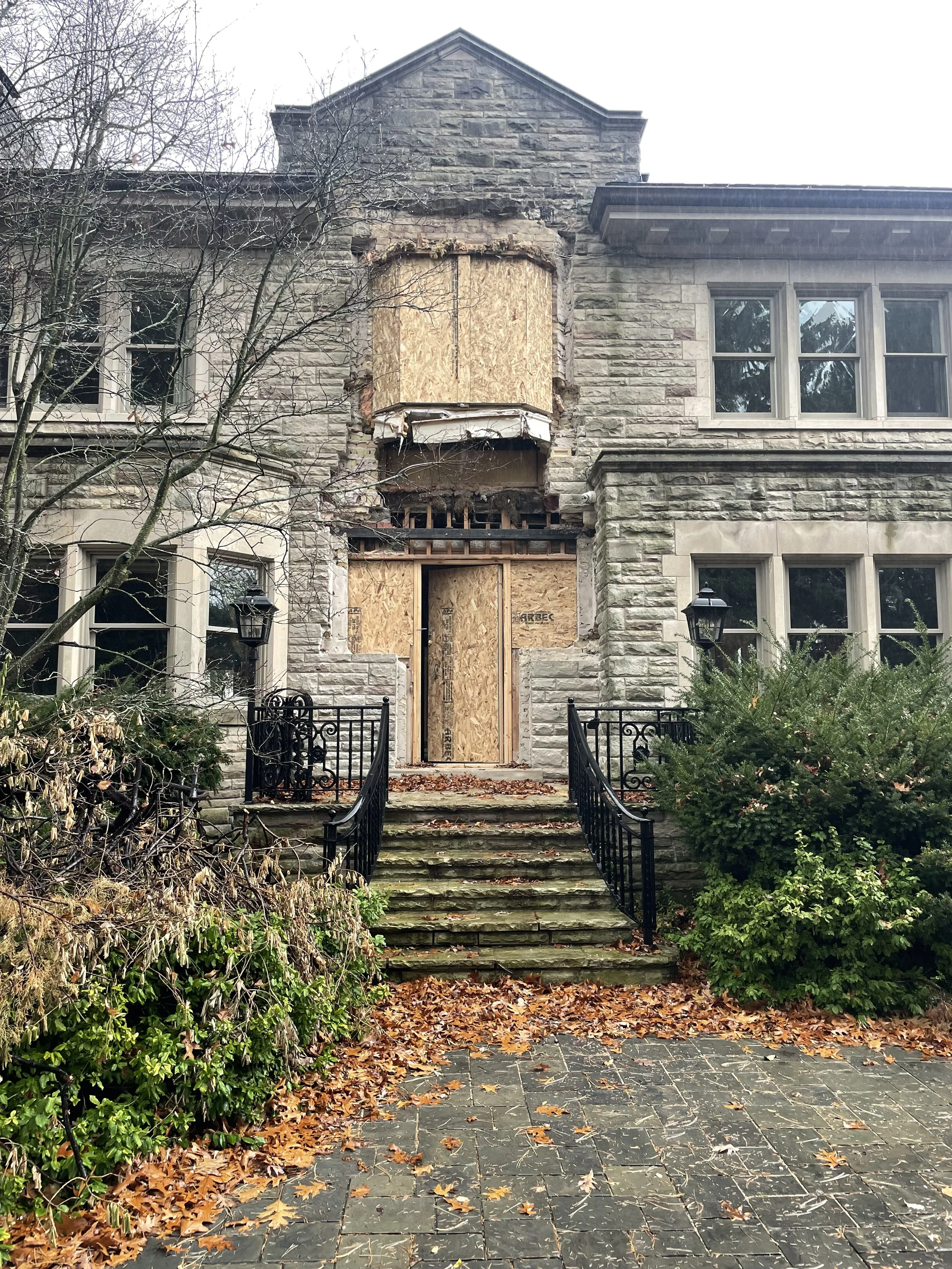
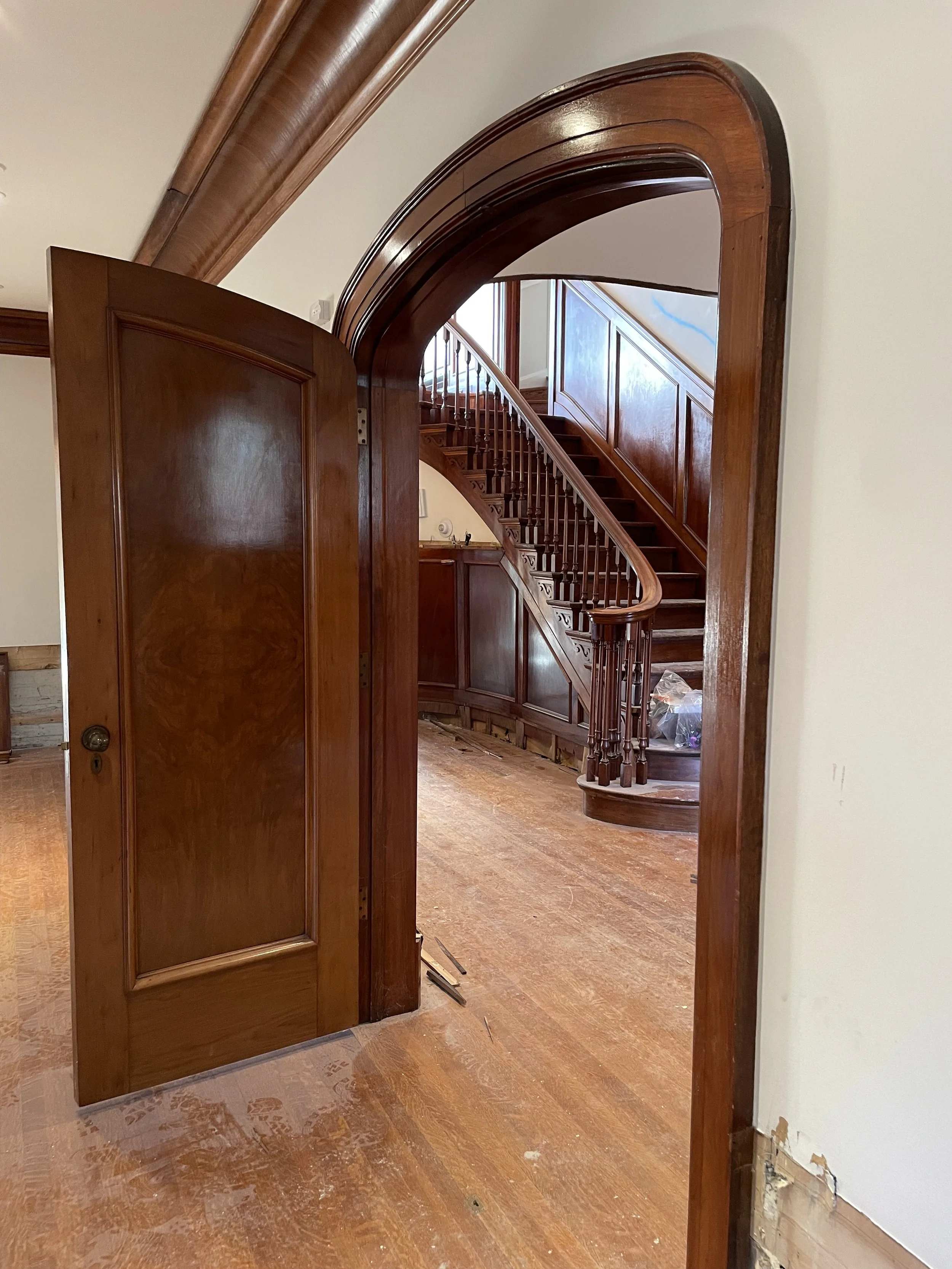
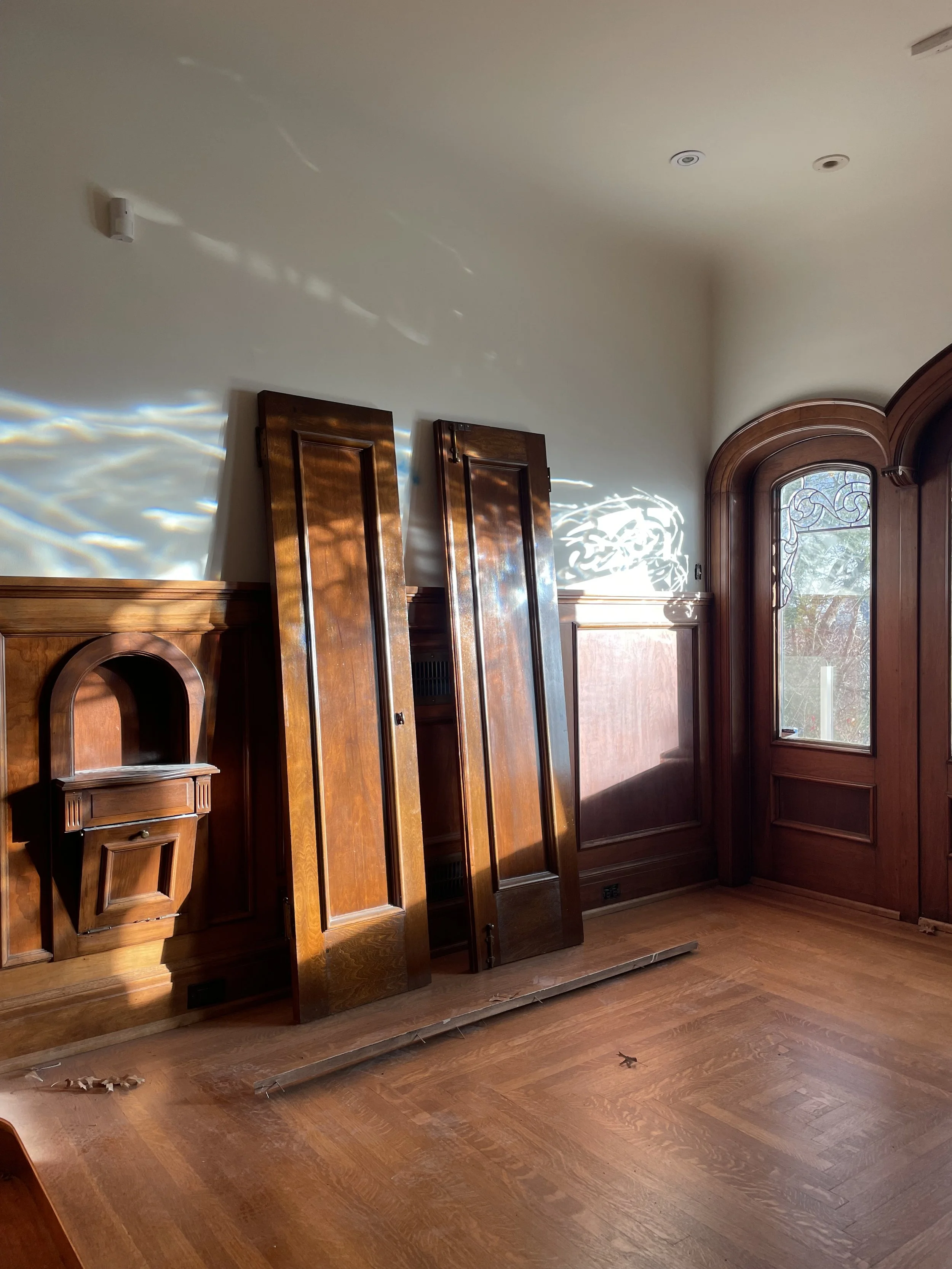
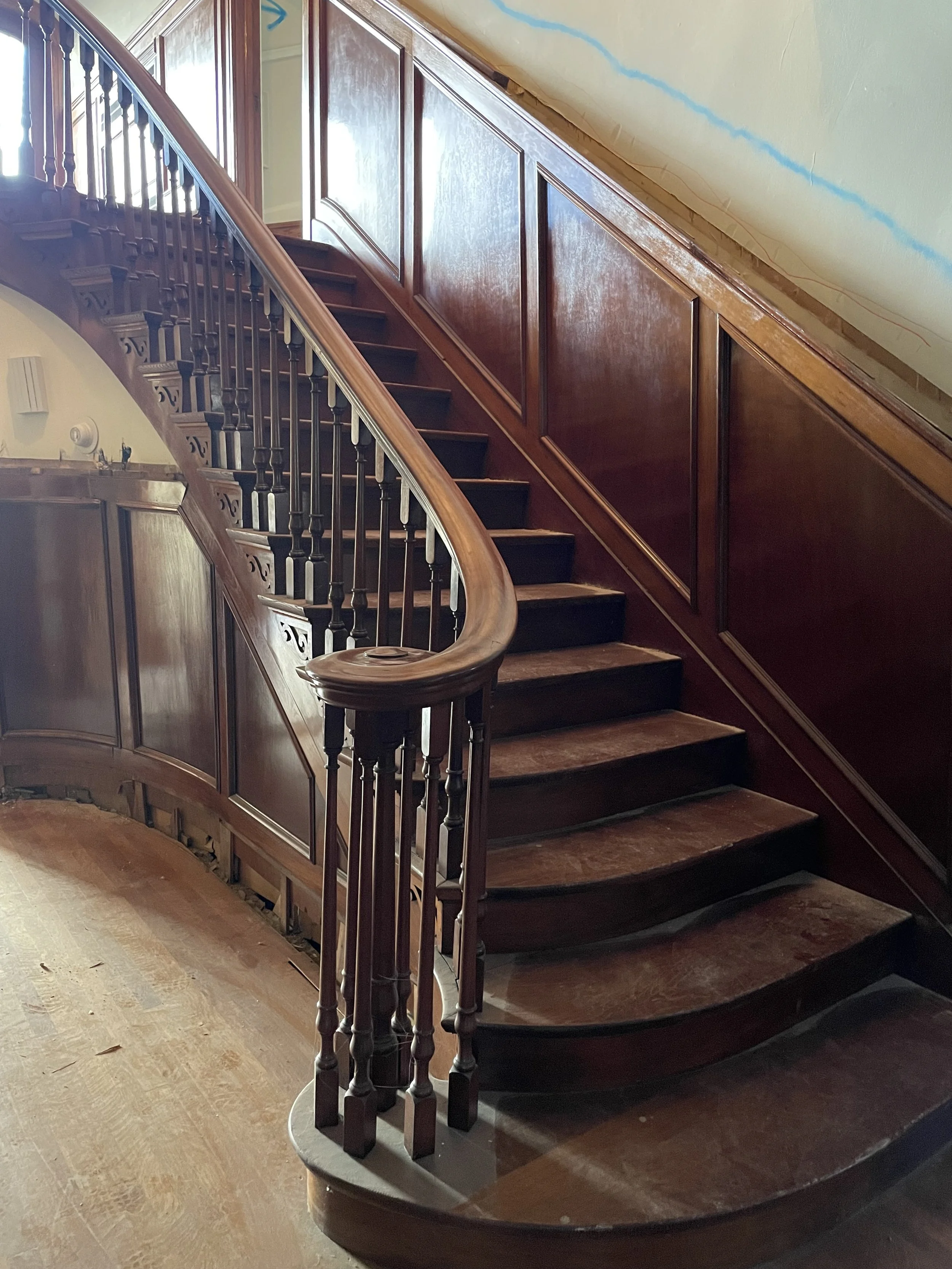
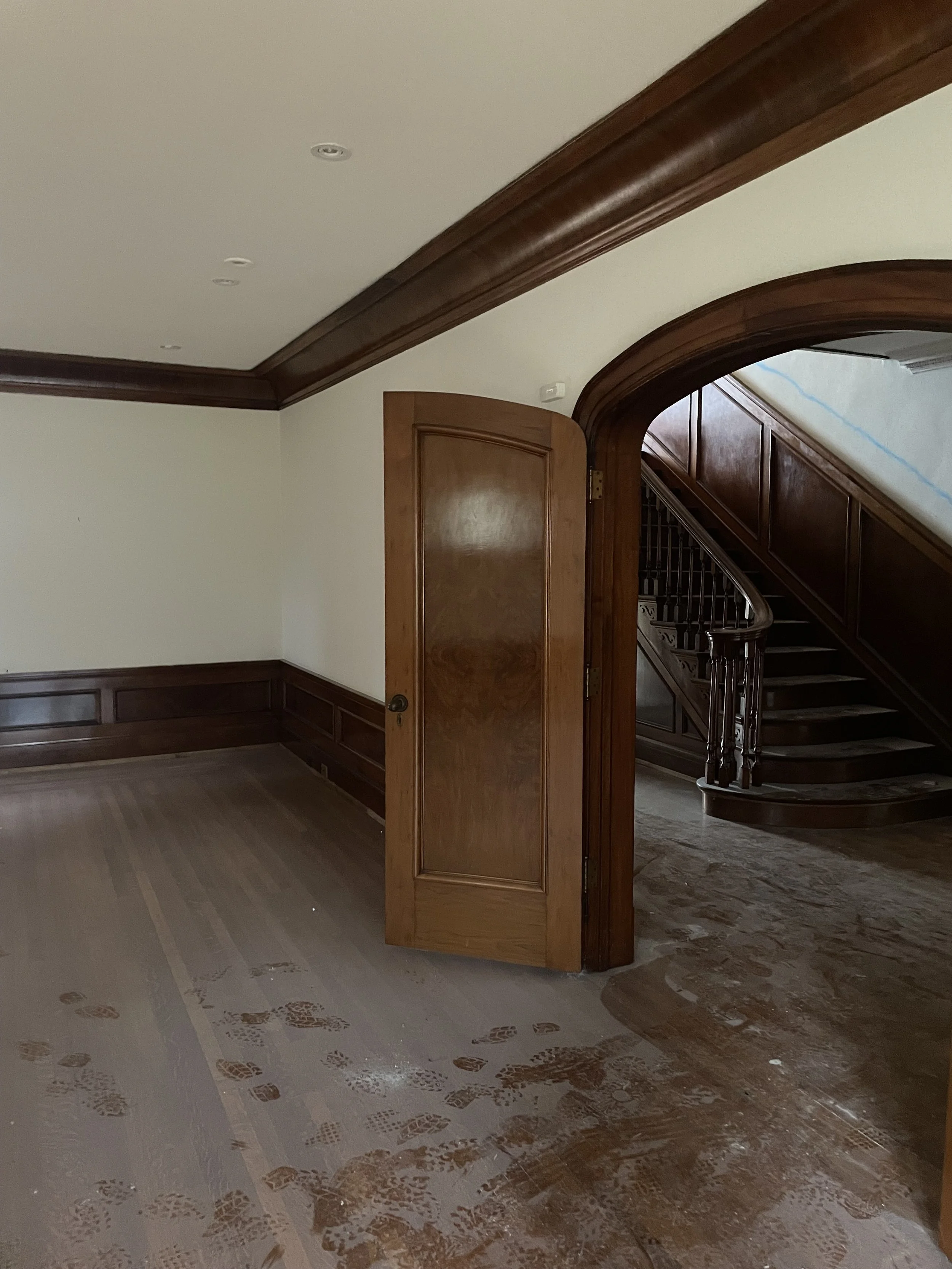
Built in the early 1930s as part of Robert Home Smith's Humber Valley Surveys, the Riverside Trail residence was a stone manse on a ravine lot overlooking the Humber River. Home Smith's covenants required exteriors of stone, stucco, or brick, and the house delivered: Credit Valley sandstone cladding with detailed limestone lintels and capping, bay windows flanking the entrance, quartersawn oak floors throughout, and walnut paneling through the formal rooms.
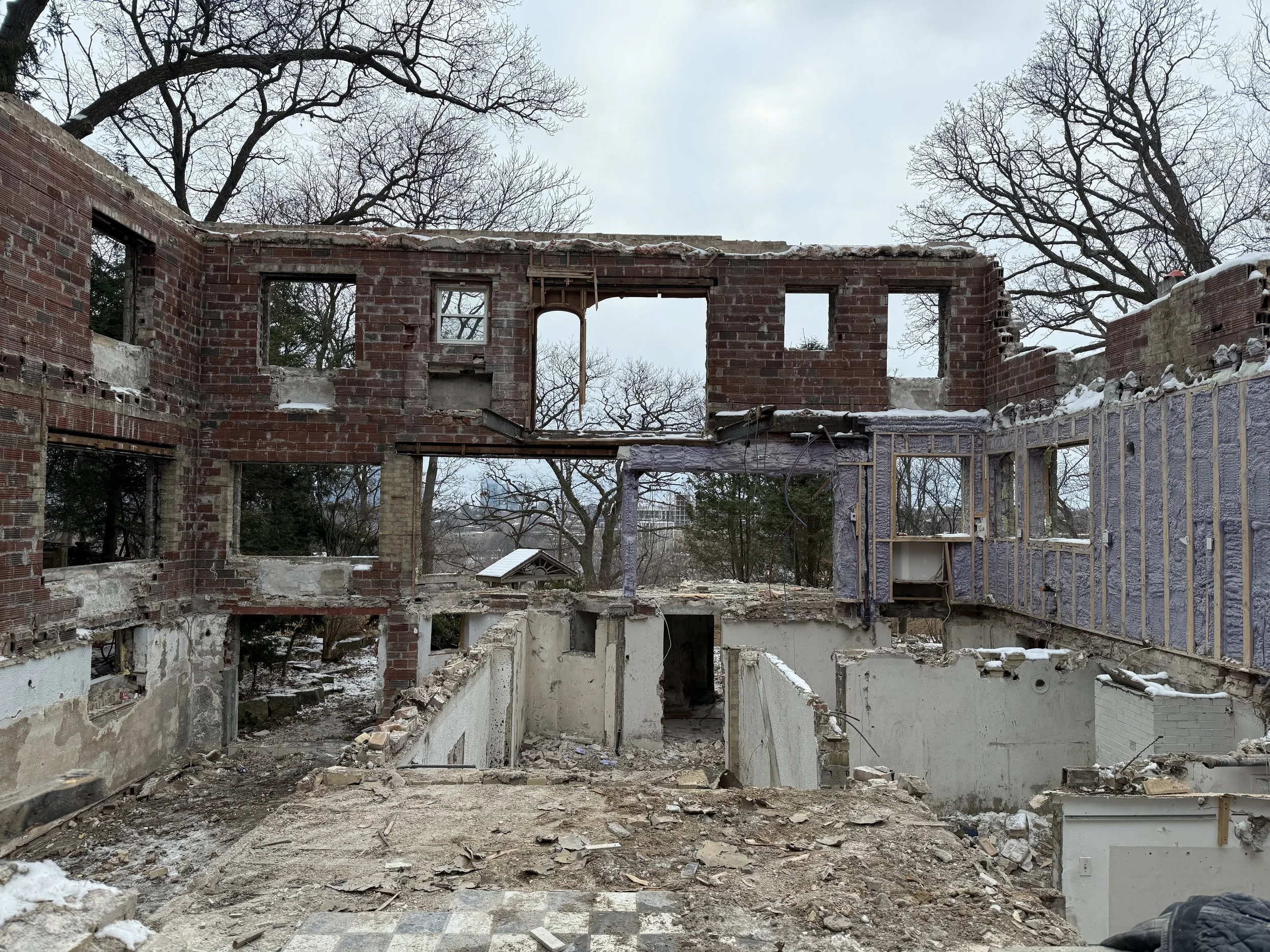
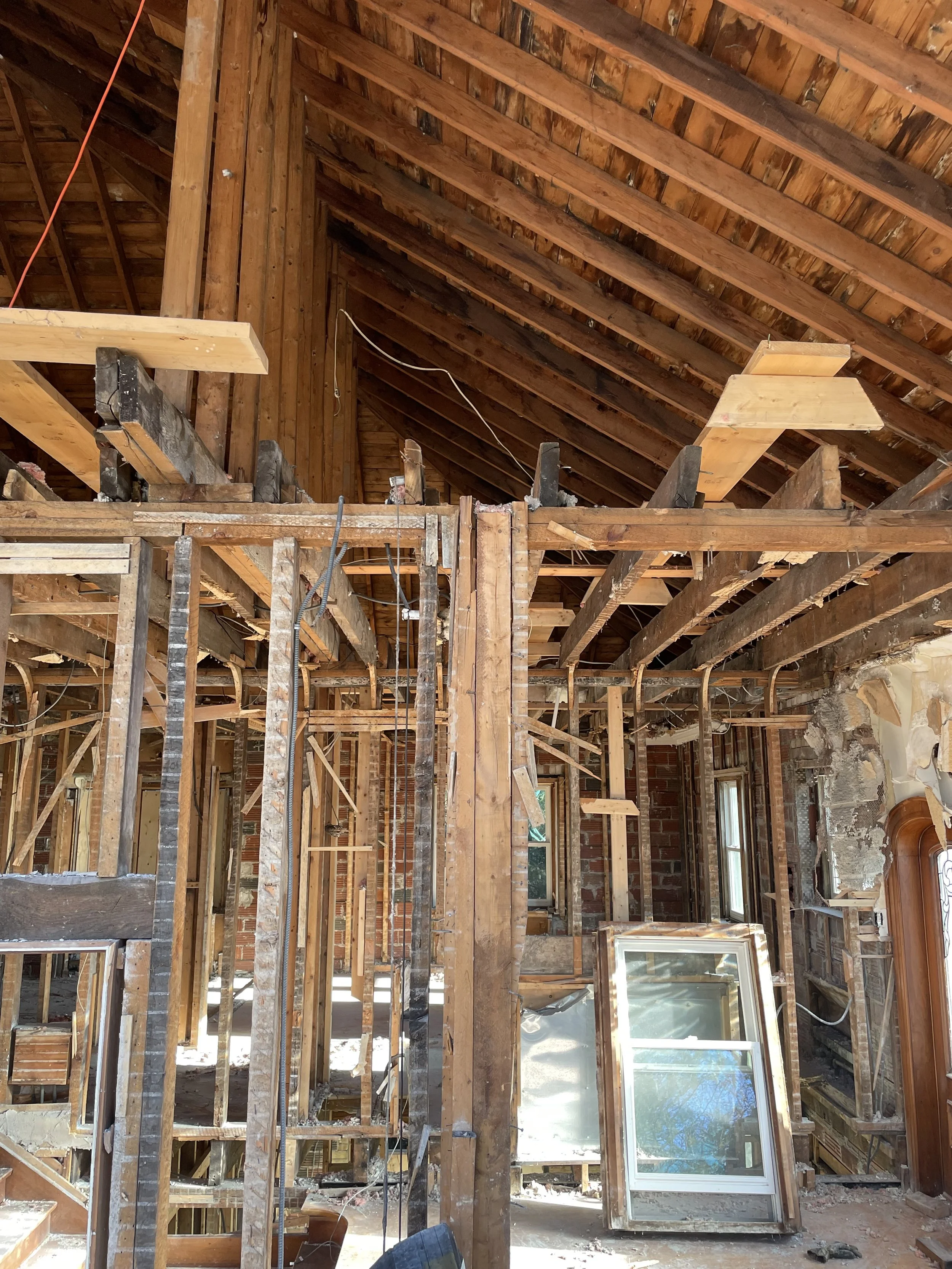
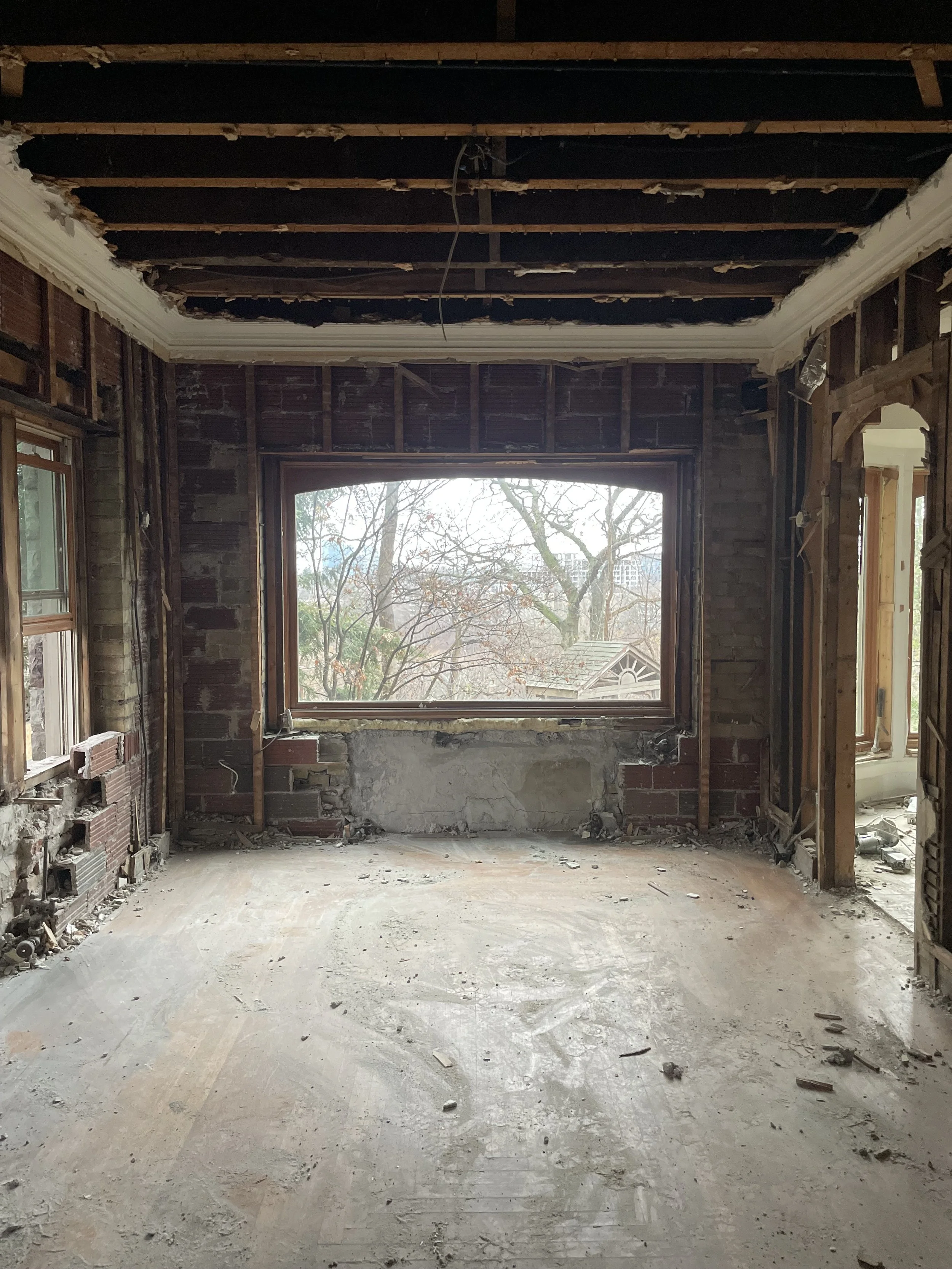
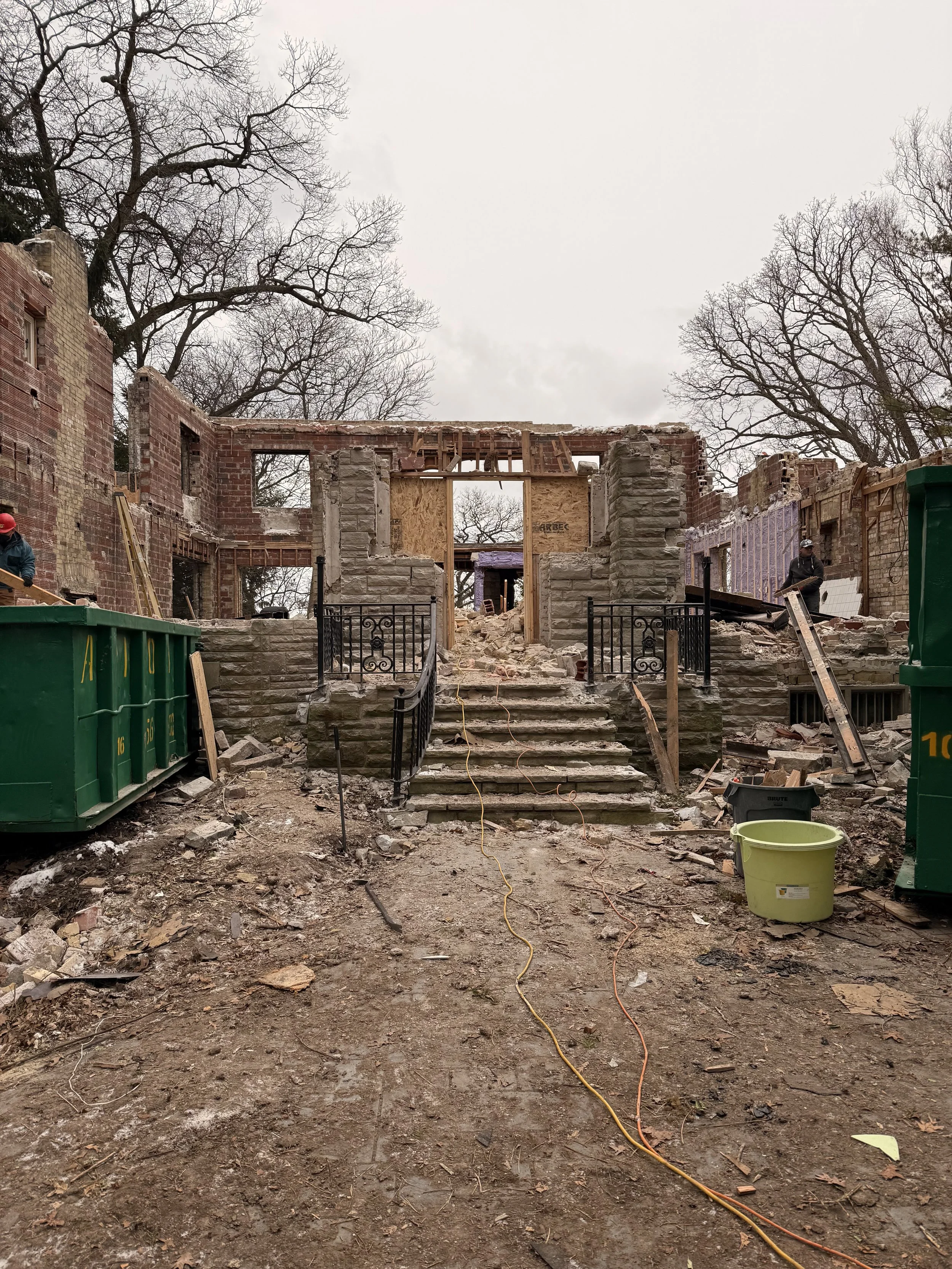
Ouroboros carried out a full deconstruction from December 2024 through January 2025, recovering 372 tonnes of material from the main house and coach house. Given the scale and timeline of the project, we used mechanically assisted deconstruction to help speed the process and keep cost in line without compromising salvage quality.
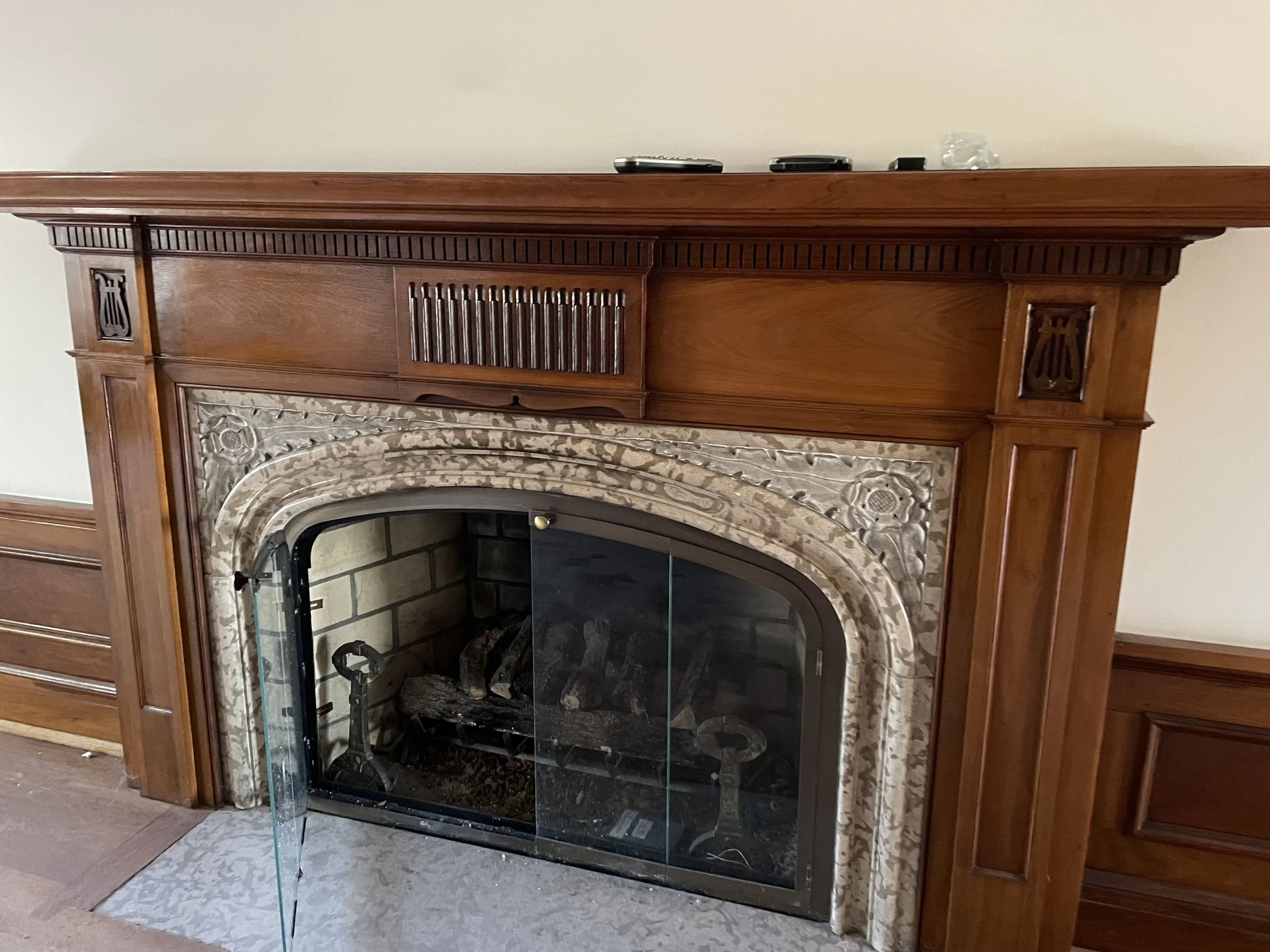
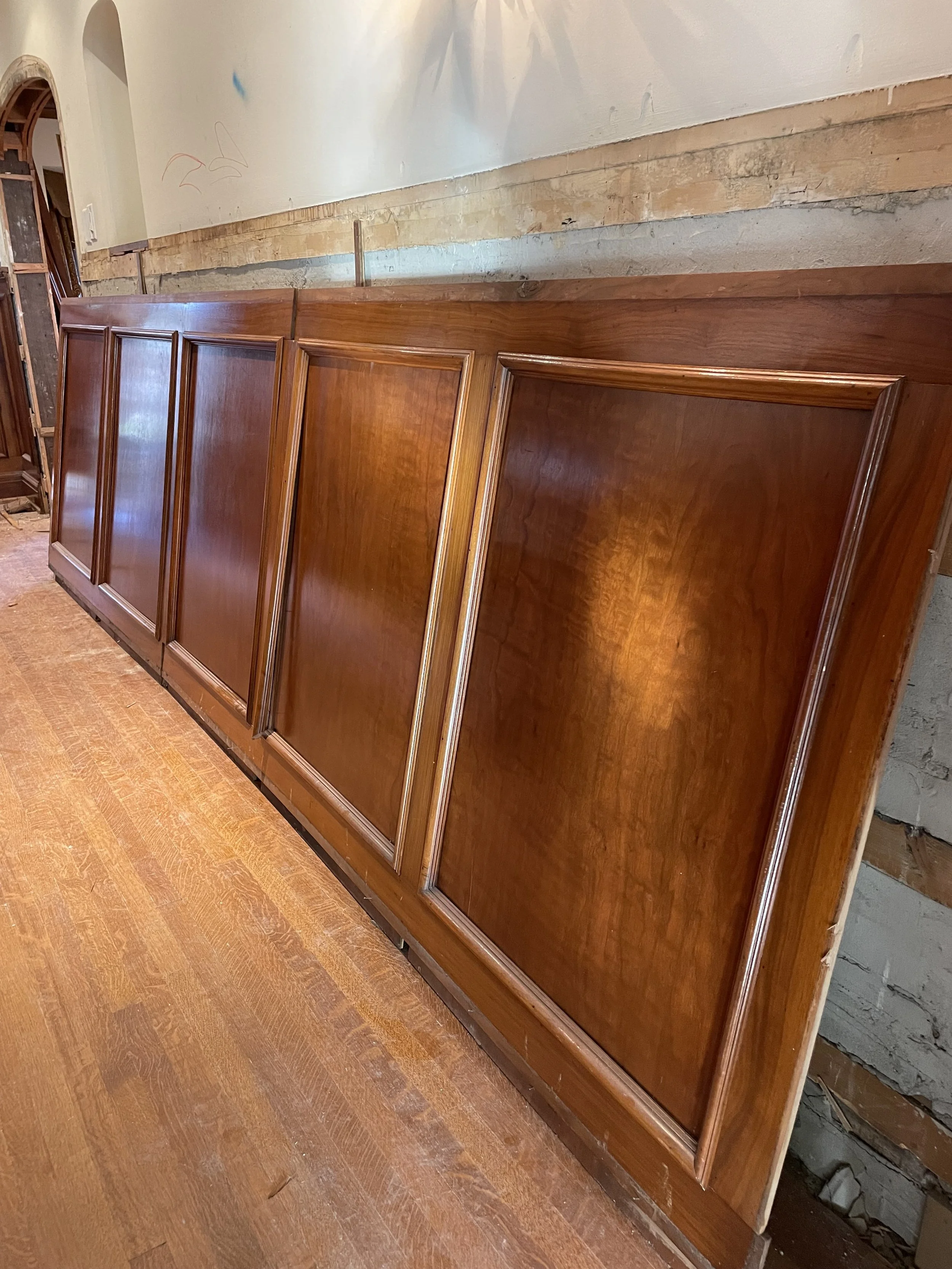
The interior was carefully salvaged first. Walnut paneling, crown, baseboards, and door and window trim were pulled intact from the living, dining, entry, and office. Twenty-six walnut veneer doors, a Tyndall stone hearth and mantle, 150 square feet of marble from the primary bath, a cedar closet, cedar sauna cladding, a restored leaded glass window, and the original period light fixtures were all salvaged. Structural lumber totaled roughly 12,950 board feet, including 3x10 floor joists.
The stonework came off next. Credit Valley sandstone, limestone lintels, sills, and parapet coping were each removed with their original elevation recorded so pieces retain their architectural context for reuse.
Diversion was strong across every material category: 80% of lumber, 68% of stone, 65% of millwork. In total, the project avoided approximately 133,000 kgCO2e of embodied carbon, the equivalent of powering 18 homes for a year, or taking 31 cars off the road.
Finishes and fixtures from the Riverside Trail residence are available through Ouroboros Deconstruction at ouroboros.market.
